

Please Leave Us A Message
Privacy statement: Your privacy is very important to Us. Our company promises not to disclose your personal information to any external company with out your explicit permission.
 Huanting Technology (Ningbo) Co., Ltd
Select Language
English


Degradable disposable tableware refers to single-use dining products—such as plates, cups, cutlery, and food containers—that are engineered to break down naturally through biological processes. Unlike traditional petroleum-based plastics that persist in the environment for centuries, fully biodegradable tableware is crafted from renewable resources like agricultural waste fibers, plant starches, and modified natural resins.
Purchasing these materials reduces your environmental footprint while maintaining the convenience of single-use items. Our team at Huanting Technology specializes in converting natural plant raw materials into high-performance, compostable solutions. By recycling agricultural waste fibers into products that can be fully decomposed—even in ocean environments—we offer a sustainable alternative that doesn't compromise on durability or functionality.
These materials are designed with low energy consumption, low carbon footprint, and low water usage throughout their production lifecycle. For buyers seeking to align with circular economy principles, our fully biodegradable modified resin and plant fiber products provide a genuine end-of-life solution: they return to the earth as compost rather than leaving behind microplastics or toxic residues.
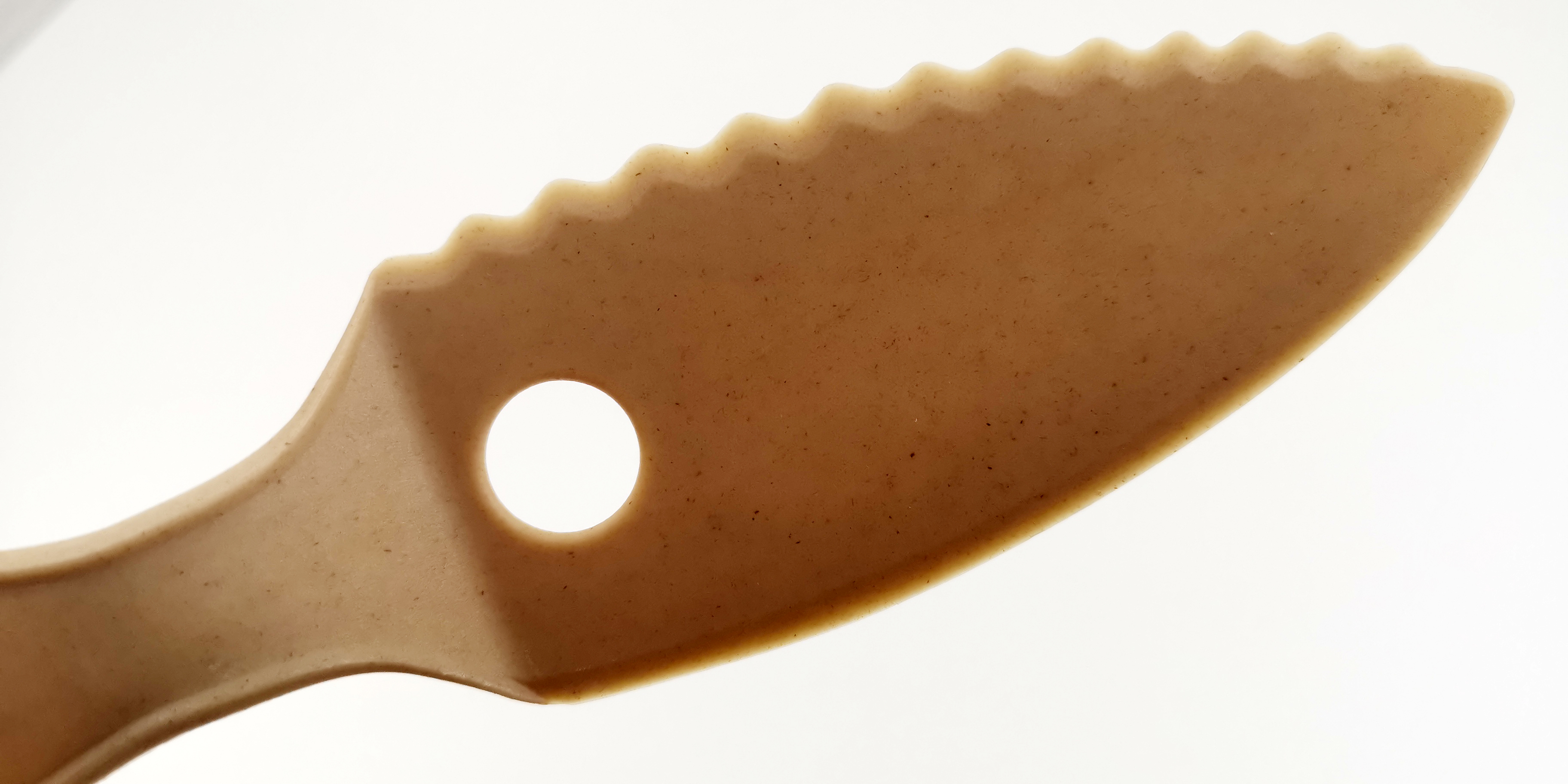
Our manufacturing process ensures that every batch of degradable disposable tableware meets rigorous performance standards. As an international top-notch research and development team, we focus on the application field of natural plants as raw materials, translating physical properties of agricultural waste conversion technology into reliable commercial products.
We use only fully biodegradable modified resin and authentic plant fiber materials. Every raw material source is traceable, ensuring that no synthetic polymers or non-degradable additives enter the final product. This purity guarantees that your tableware will decompose completely under industrial composting conditions.
Advanced production processes are employed to manufacture high-quality fully degradable materials. From fiber extraction to molding, each stage is monitored for consistency. Our low-energy, low-carbon production methods also mean lower utility costs and a reduced environmental impact per unit produced.
Our plant fiber products undergo extensive testing for heat resistance, moisture barrier properties, and structural integrity. Buyers can trust that our degradable tableware performs comparably to conventional plastics during serving, transport, and storage—without the long-term ecological damage.
We recycle agricultural waste fibers into usable products, creating a true closed-loop system. By sourcing from endless sustainable cycles of natural plant raw materials, we reduce dependency on fossil fuels and support farming communities that benefit from waste valorization.
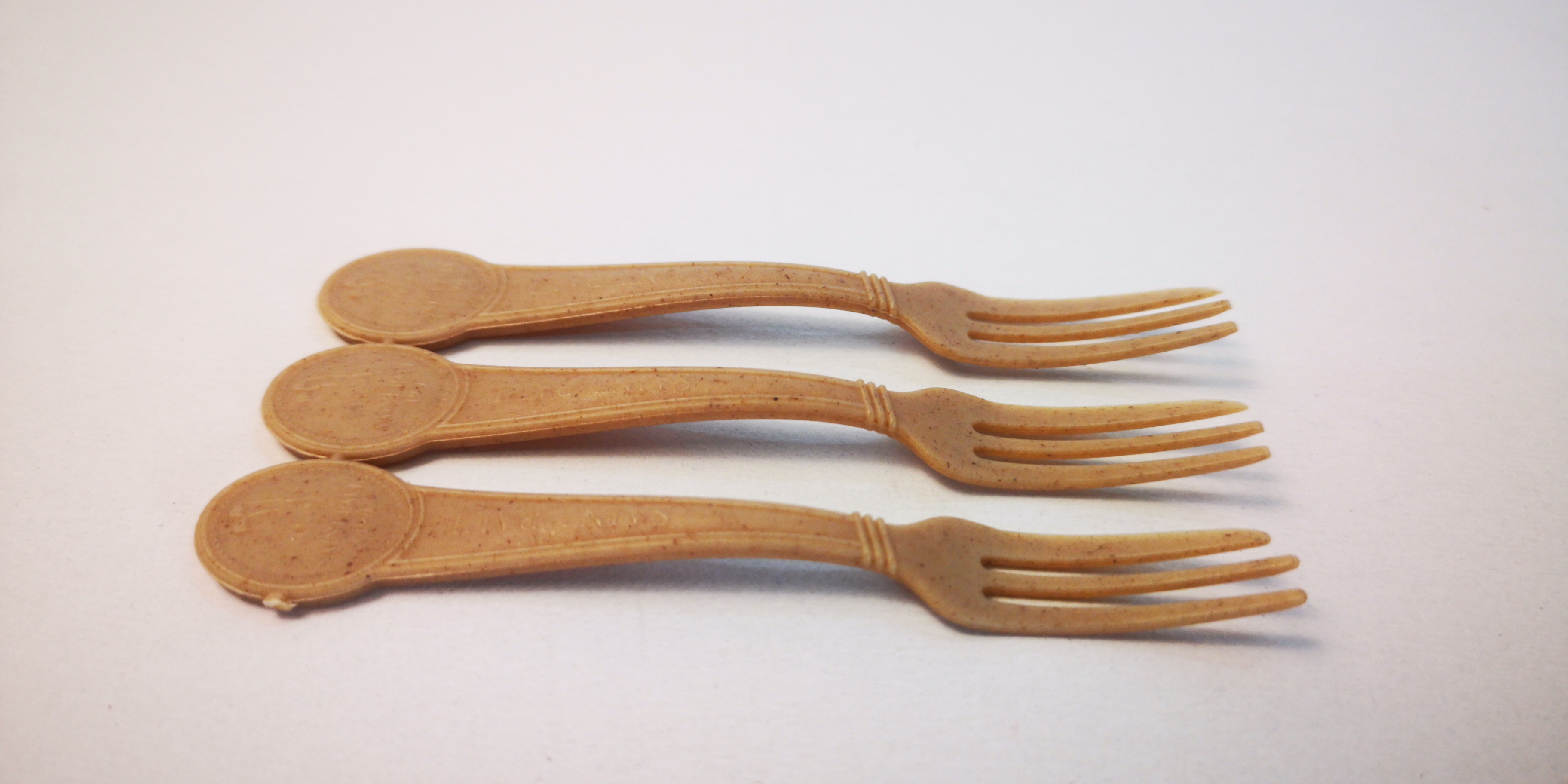
Selecting the optimal degradable disposable tableware requires understanding both material composition and end-of-life requirements. Not all "biodegradable" claims are equal—buyers must distinguish between truly compostable products and those that merely fragment into microplastics.
Ensure the supplier provides documentation showing that their products can be fully decomposed in composting environments—including marine degradation if relevant to your market. Our fully biodegradable materials have been engineered to break down completely, leaving no toxic residue behind.
Consider the intended use case: hot beverages require different barrier properties than cold desserts. Plant fiber products excel in dry applications, while modified resin formulations may offer superior moisture resistance. Match the material type to your specific food service needs.
Work with manufacturers who practice circular economy principles and demonstrate consistent batch quality. A supplier committed to innovation and sustainable development—as we are at Huanting Technology—will provide stable supply chains and responsive technical support throughout your procurement journey.
Use this comprehensive checklist to evaluate potential suppliers and ensure your degradable disposable tableware purchase aligns with sustainability goals, regulatory compliance, and operational requirements.
Choosing the right partner for degradable disposable tableware procurement is critical to ensuring product quality, supply reliability, and alignment with your sustainability objectives. We recommend evaluating suppliers based on the following criteria:
Prioritize suppliers with international-level research and development teams specializing in natural plant raw material applications. Strong R&D capability ensures continuous product improvement and access to cutting-edge biodegradable technologies.
Look for manufacturers who actively recycle agricultural waste fibers and practice the circular economy. These suppliers contribute to environmental protection while reducing raw material costs through waste valorization strategies.
Select partners who insist on using advanced production processes to manufacture high-quality fully degradable materials. Quality-first suppliers meet customer expectations consistently and stand behind their products with reliable warranty and support.
Huanting Technology (Ningbo) Co., Ltd exemplifies these recommended qualities. As a leader in fully biodegradable modified resin and plant fiber product development, we combine scientific innovation with genuine environmental stewardship. Our mission to contribute to the environment through fully degradable material production makes us a trusted partner for global buyers seeking responsible sourcing solutions.
Procurement professionals frequently encounter challenges when transitioning from conventional plastics to degradable alternatives. Understanding these common problems in advance allows you to mitigate risks and make informed purchasing decisions.
Many suppliers label products as "biodegradable" without providing verifiable decomposition data. Some products only fragment into smaller pieces rather than truly decomposing, creating microplastic pollution instead of solving it.
Solution: Always request third-party certification and laboratory test reports confirming full decomposition. Ask specifically about marine degradation capability and composting timeline requirements.
Variations in raw material sourcing—particularly agricultural waste fibers—can lead to inconsistent product performance across production batches. This inconsistency affects downstream operations and customer satisfaction.
Solution: Partner with manufacturers who maintain strict quality control protocols and standardized production processes. Request sample testing before committing to large orders.
Some suppliers offer only a narrow selection of degradable tableware types, forcing buyers to work with suboptimal products for specific applications such as hot beverage containers or oily food packaging.
Solution: Work with comprehensive solution providers like Huanting Technology who offer fully biodegradable products spanning multiple categories—from modified resin to plant fiber materials—ensuring one-stop sourcing flexibility.
Degradable tableware often carries a higher price point than conventional plastic alternatives, raising concerns about total landed cost and profit margins for end consumers.
Solution: Evaluate total cost of ownership including regulatory compliance benefits, brand reputation gains, and potential subsidies for sustainable products. Low-energy, low-carbon production methods help keep costs competitive over time.
Below are answers to the most common questions buyers ask when sourcing fully biodegradable tableware solutions. These insights help streamline your procurement workflow and reduce decision-making risk.
Biodegradable means a material can break down naturally over time through microbial action. Compostable is a stricter standard—it means the product not only decomposes but does so within a specific timeframe under controlled composting conditions, producing nutrient-rich humus without toxic residues. All compostable materials are biodegradable, but not all biodegradable materials meet compostability standards. For maximum environmental impact, choose fully compostable degradable disposable tableware.
Yes, our fully biodegradable modified resin formulations are engineered to maintain structural integrity and thermal resistance suitable for hot beverages and foods. The modified resin provides enhanced heat tolerance while preserving the material's ability to decompose completely at end-of-life. Always verify the specific temperature rating for the product type you intend to purchase.
Under industrial composting conditions, plant fiber products typically decompose within 90 to 180 days. In home composting environments, the timeline may extend to 6–12 months depending on temperature, humidity, and microbial activity. Our materials are designed to decompose even in ocean environments, though rates vary based on water temperature and salinity.
Minimum order quantities vary by supplier and product configuration. Many manufacturers accommodate trial orders to allow buyers to assess product performance before scaling up. Contact your supplier directly to discuss MOQ flexibility and volume-based pricing tiers.
No. High-quality fully biodegradable tableware manufactured from agricultural waste fibers and advanced production processes meets food-grade safety standards. Our products are free from harmful chemicals such as BPA, phthalates, and heavy metals commonly found in conventional plastic alternatives. We insist on using only safe, certified materials to protect end consumers.
Fully biodegradable tableware produced from renewable plant materials generates significantly lower carbon emissions compared to petroleum-based plastics. Our low-energy, low-carbon-footprint, and low-water-consumption production methods further reduce the environmental impact. Lifecycle assessments consistently show that plant fiber and modified resin products emit fewer greenhouse gases across their entire lifespan—from raw material extraction through decomposition.
Privacy statement: Your privacy is very important to Us. Our company promises not to disclose your personal information to any external company with out your explicit permission.
Fill in more information so that we can get in touch with you faster
Privacy statement: Your privacy is very important to Us. Our company promises not to disclose your personal information to any external company with out your explicit permission.