

Please Leave Us A Message
Privacy statement: Your privacy is very important to Us. Our company promises not to disclose your personal information to any external company with out your explicit permission.
 Huanting Technology (Ningbo) Co., Ltd
Select Language
English


Biodegradable agricultural film represents a significant leap forward from traditional plastic mulches, designed to break down naturally after the growing season ends. Unlike conventional polyethylene (PE) films that persist in fields for decades, these advanced materials decompose into water, carbon dioxide, and biomass through microbial action.
For modern farming operations, this technology offers a sustainable alternative that maintains high performance during crop growth while eliminating the environmental burden of post-harvest disposal. By leveraging natural plant raw materials and advanced fabrication services, companies like Huanting Technology are redefining how we approach soil protection and moisture retention.
The core benefit for growers is twofold: it preserves soil health by preventing microplastic accumulation, and it significantly reduces labor costs associated with film removal and recycling.
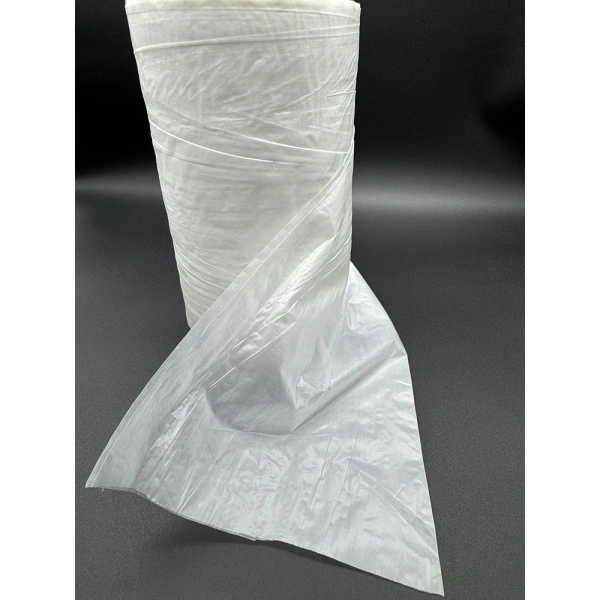
Our production process is built on rigorous quality control measures to ensure every roll of biodegradable agricultural film meets international standards. We utilize fully biodegradable modified resins derived from agricultural waste fibers, ensuring that the raw materials themselves are sustainable from the very beginning.
Key Manufacturing Advantages:
This commitment to quality allows us to provide biodegradable product solutions that farmers can trust, knowing that the film will perform reliably throughout the season and then safely return to the earth.
Selecting the appropriate biodegradable agricultural film requires understanding the specific needs of your crops and local climate conditions. Not all degradable films are created equal; factors such as thickness, additive formulation, and decomposition rate play critical roles in performance.
Key Selection Criteria:
Consulting with suppliers who offer customized biodegradable material solutions ensures you get a product tailored to your specific agricultural challenges.
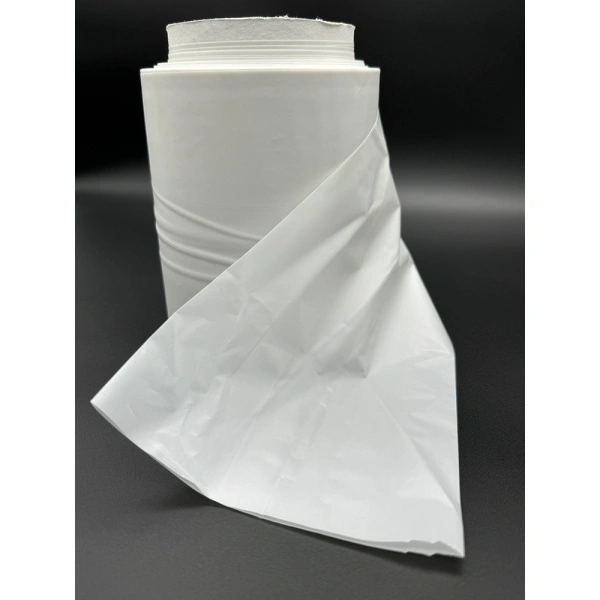
Before committing to a large order of biodegradable agricultural film, use this comprehensive checklist to evaluate potential suppliers and products. This ensures you minimize risk and maximize the value of your sustainable packaging investment.
Ensure the supplier provides valid certifications for full biodegradability, such as EN 13432 or ASTM D6400. Verify that claims are backed by third-party lab results.
Request technical data sheets detailing tensile strength, elongation at break, and UV stability. Compare these metrics against traditional PE films to gauge performance parity.
Assess the supplier's production capacity and lead times. A reliable partner should demonstrate consistent output and transparent communication channels.
Calculate total cost of ownership, including potential savings on film removal labor and waste disposal fees. Often, the higher upfront cost is offset by operational efficiencies.
Check if the supplier offers OEM/ODM services to tailor film thickness, width, and additives to your specific crop requirements.
Review the supplier's sustainability report. Look for commitments to low carbon footprint production and use of renewable raw materials.
Sourcing biodegradable agricultural film can present unique challenges. Understanding these common pitfalls helps buyers navigate the market more effectively and avoid costly mistakes.
Problem: Film breaks down before the crop is harvested due to high soil microbial activity or incorrect thickness selection.
Solution: Work with suppliers who offer customizable decomposition rates and conduct site-specific trials before large-scale adoption.
Problem: Variations in raw material quality lead to inconsistent film strength and tear resistance across batches.
Solution: Partner with manufacturers who have robust quality control systems and use standardized modified resins.
Problem: Some products labeled "biodegradable" only fragment into microplastics without fully decomposing.
Solution: Demand proof of complete biodegradation through recognized international standards and independent testing.
Problem: Improper storage conditions can initiate premature degradation or reduce shelf life.
Solution: Store films in cool, dry, and dark environments away from direct sunlight and heat sources.
Biodegradable agricultural film is versatile and suitable for a wide range of agricultural and horticultural applications. Its adaptability makes it an ideal choice for modern farms seeking to reduce their environmental impact.
Ideal for high-value vegetable crops where weed suppression and moisture retention are critical. The film eliminates the need for post-harvest cleanup.
Used for ground cover management in orchards and vineyards, suppressing grass growth and improving soil health under trees and vines.
Serves as durable greenhouse films that maintain transparency and thermal properties while offering end-of-life biodegradability.
Functions as biodegradable mulch mats that protect soil from erosion and temperature fluctuations, decomposing directly into the soil.
Specialized variants for silage wrapping ensure feed preservation while allowing easier handling of waste compared to traditional plastics.
Applied in landscaping projects for weed control and soil conservation, providing an eco-friendly solution for public and private green spaces.
When sourcing biodegradable agricultural film, choosing the right supplier is crucial for long-term success. Look for partners who prioritize innovation, sustainability, and reliability.
A leader in the field of natural plant-based materials, Huanting Technology specializes in fully biodegradable modified resins and plant fiber products. Their commitment to reducing environmental impact through innovative R&D makes them a top choice for buyers seeking genuine sustainability.
Why Choose Them:
If considering alternative suppliers, ensure they meet similar criteria:
Get answers to the most common questions buyers have when transitioning to biodegradable agricultural film solutions.
The lifespan typically ranges from 3 to 6 months, depending on the formulation, thickness, and environmental conditions. This duration is designed to cover most crop cycles, after which the film begins to decompose naturally.
No, one of the main advantages is that removal is often unnecessary. After harvest, the film can be tilled directly into the soil where it will decompose over time, saving significant labor costs.
Modern biodegradable films have been engineered to match the tensile strength and durability of traditional PE films. While there may be slight variations in elongation, they perform equally well under standard agricultural conditions.
Yes, but decomposition rates can vary based on soil microbiology. In soils with low microbial activity, decomposition may take longer. It is advisable to test a small area first to understand local conditions.
Look for internationally recognized certifications such as EN 13432 (Europe), ASTM D6400 (USA), or JIS K 0101 (Japan). These ensure the product meets strict criteria for biodegradability and compostability.
While the initial purchase price per roll may be higher, the total cost of ownership is often lower due to savings on removal labor, waste disposal fees, and potential regulatory incentives for using sustainable materials.
Privacy statement: Your privacy is very important to Us. Our company promises not to disclose your personal information to any external company with out your explicit permission.
Fill in more information so that we can get in touch with you faster
Privacy statement: Your privacy is very important to Us. Our company promises not to disclose your personal information to any external company with out your explicit permission.