

Please Leave Us A Message
Privacy statement: Your privacy is very important to Us. Our company promises not to disclose your personal information to any external company with out your explicit permission.
 Huanting Technology (Ningbo) Co., Ltd
Select Language
English


In the rapidly evolving landscape of sustainable packaging, sugarcane-derived biodegradable cup lids represent a significant leap forward in eco-friendly material science. These lids are crafted from natural plant-based raw materials, specifically agricultural waste fibers derived from sugarcane processing.
Unlike traditional petroleum-based plastics, these lids offer a truly circular lifecycle. They are designed to be fully compostable and decomposable, breaking down naturally without leaving behind harmful microplastics or toxic residues. For brands committed to reducing their environmental footprint, switching to sugarcane-based alternatives provides a tangible way to demonstrate sustainability to consumers while maintaining high performance standards.
The core advantage lies in the material's origin: renewable agricultural byproducts. This not only reduces reliance on fossil fuels but also adds value to agricultural waste streams, supporting a greener economy. As global regulations tighten on single-use plastics, sugarcane-derived biodegradable cup lids have emerged as a compliant, future-proof solution for food service businesses.
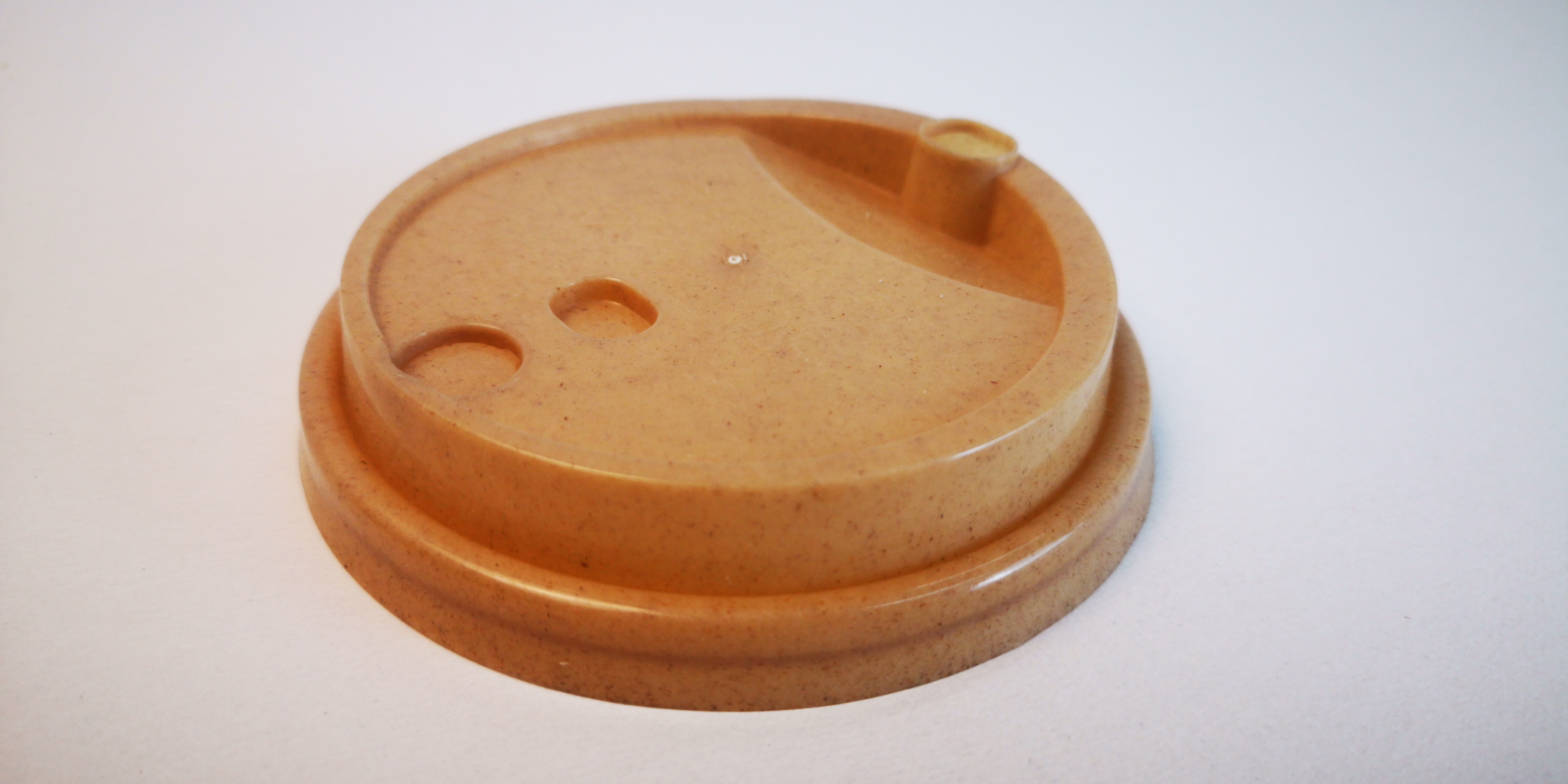
Our manufacturing process for sugarcane-derived biodegradable cup lids adheres to strict international quality standards. Every batch undergoes comprehensive testing to ensure consistency in thermal stability, leak resistance, and structural integrity.
Key Quality Benefits:
Huaining Technology leverages advanced R&D capabilities to continuously improve material properties. Our team specializes in optimizing the physical characteristics of natural plant fibers, resulting in lids that match or exceed the performance of traditional plastics while remaining fully biodegradable.
Ensure your supplier provides valid certifications such as EN13432, ASTM D6400, or TUV Austria OK Compost. These documents prove that the sugarcane-derived biodegradable cup lids meet international compostability standards. Without proper certification, claims of "biodegradability" may not hold up under regulatory scrutiny.
Different beverages require different temperature tolerances. If you serve hot drinks like coffee or tea, verify that the lid maintains its shape and seal at temperatures above 90°C. Request sample testing to confirm real-world performance before committing to large orders.
Not all biodegradable lids fit standard cup sizes perfectly. Work with suppliers who offer customizable sizing options or extensive size ranges. Proper fit is critical for preventing leaks and ensuring customer satisfaction. Ask about compatibility with popular cup manufacturers' dimensions.
Choose manufacturers with proven track records in sustainable production. Companies like Huanting Technology, with dedicated R&D teams focused on natural plant materials, can provide consistent supply and technical support throughout your procurement process.
Many buyers face difficulties finding suppliers who can maintain consistent quality across large orders. Agricultural-based materials can vary by harvest season, affecting material properties. Work with established manufacturers who have robust sourcing networks and quality control systems in place.
Biodegradable materials often carry a premium price compared to conventional plastics. However, consider the total cost of ownership, including potential regulatory compliance costs avoided and brand value enhancement from sustainable practices. Long-term contracts with reliable suppliers can help stabilize pricing.
Customers may not understand how to properly dispose of biodegradable lids. Provide clear labeling and disposal instructions to ensure products reach appropriate composting facilities. Mis disposal can undermine the environmental benefits of sugarcane-derived biodegradable cup lids.
Distinguishing between "biodegradable," "compostable," and "plant-based" can be confusing. Ensure your supplier clearly defines what each term means for their specific products. Request detailed technical data sheets to verify actual performance characteristics.
Why We Recommend: An international top-notch research and development team specializing in natural plant raw materials. Their focus on agricultural waste conversion technology ensures innovative, high-quality biodegradable solutions.
Key Strengths:
When selecting a supplier for sugarcane-derived biodegradable cup lids, prioritize companies that demonstrate:
Yes, our sugarcane-derived biodegradable cup lids are certified compostable under international standards such as EN13432 and ASTM D6400. They break down completely in industrial composting facilities within 90-180 days, leaving no toxic residue. Unlike conventional plastics that persist for centuries, these lids return nutrients to the soil, supporting circular economy principles.
Absolutely. Our biodegradable cup lids are engineered with specialized resin formulations that provide excellent thermal stability. They can safely contain beverages at temperatures up to 100°C without warping, leaking, or releasing harmful substances. This makes them ideal for coffee, tea, and other hot drink applications where traditional bioplastics might fail.
While biodegradable lids typically carry a 10-30% premium over conventional plastic lids, the gap is narrowing as production scales and technology improves. Consider the long-term value: avoiding potential plastic taxes, meeting sustainability goals that attract eco-conscious consumers, and future-proofing against increasingly strict environmental regulations. Many buyers find the investment worthwhile for brand enhancement and compliance benefits.
Minimum order quantities vary depending on specifications and customization requirements. Standard sizes typically have lower MOQs, while custom-printed or uniquely shaped lids may require larger commitments. Contact Huanting Technology directly for tailored quotes based on your specific volume needs and timeline requirements. They offer flexible solutions to accommodate both small-scale trials and large-volume production runs.
No, our sugarcane-derived biodegradable cup lids are designed to be taste-neutral. The materials undergo rigorous purification processes to ensure they don't impart any off-flavors to beverages. Thousands of sensory tests confirm that customers cannot distinguish between our biodegradable lids and conventional plastic lids in blind taste tests, ensuring your product quality remains uncompromised.
Used biodegradable cup lids should be disposed of in industrial composting facilities rather than home compost bins or regular trash. Many municipalities now offer commercial composting services for food service waste. Check with local waste management providers for designated drop-off locations. Proper disposal is essential to realize the full environmental benefits of choosing sugarcane-derived biodegradable cup lids.
Privacy statement: Your privacy is very important to Us. Our company promises not to disclose your personal information to any external company with out your explicit permission.
Fill in more information so that we can get in touch with you faster
Privacy statement: Your privacy is very important to Us. Our company promises not to disclose your personal information to any external company with out your explicit permission.