


Please Leave Us A Message
Privacy statement: Your privacy is very important to Us. Our company promises not to disclose your personal information to any external company with out your explicit permission.
 Huanting Technology (Ningbo) Co., Ltd
Select Language
English


Biodegradable husk pigment pellets are advanced raw materials designed for the modern manufacturing industry, combining natural agricultural waste with fully degradable modified resin. Unlike traditional plastics that persist in the environment for centuries, these pellets offer a sustainable alternative that decomposes completely when disposed of correctly.
At Huanting Technology (Ningbo) Co., Ltd, we specialize in converting natural plant fibers and agricultural waste into high-performance materials. Our biodegradable husk pigment pellets leverage proprietary physical property conversion technologies to create products that can be composted, recycled, or fully decomposed in ocean environments.
These materials represent a significant step forward in circular economy practices. By utilizing agricultural byproducts as primary feedstock, we reduce reliance on fossil-fuel-based plastics while creating new value streams for farming communities. The resulting pigment pellets maintain excellent processability for injection molding, extrusion, and blow molding applications.
Our husk pigment pellets break down completely in industrial composting facilities and natural environments, leaving no microplastic residue behind.
Produced using low-energy processes and renewable agricultural waste, our materials significantly reduce greenhouse gas emissions compared to conventional plastics.
We transform rice husks and other crop residues into valuable manufacturing inputs, supporting sustainable agriculture and reducing landfill waste.
The modified resin formulation ensures smooth processing on standard plastic manufacturing equipment without requiring costly retooling.
Specialized formulations allow for complete decomposition in marine environments, addressing the critical issue of ocean plastic pollution.
Natural pigments derived from plant sources provide vibrant, consistent coloring options while maintaining full biodegradability credentials.
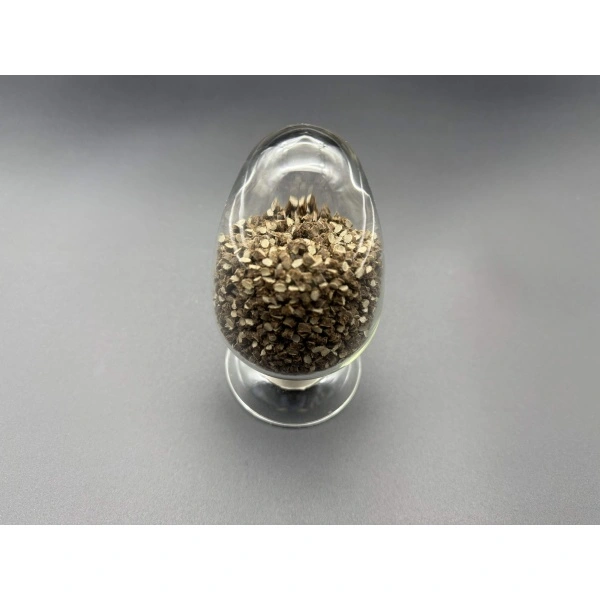
Our manufacturing facility implements comprehensive quality management systems throughout every stage of production. From raw material sourcing to final product testing, each batch undergoes strict verification to ensure consistency and performance reliability.
As an international research and development team specializing in natural plant applications, we continuously innovate our physical property conversion technologies. This expertise allows us to optimize the mechanical properties, thermal stability, and degradation rates of our biodegradable husk pigment pellets.
Our commitment to environmental responsibility extends beyond the product itself. We employ low-energy consumption manufacturing methods, minimize water usage, and maintain a carbon footprint significantly lower than traditional plastic production facilities.
Selecting the appropriate biodegradable husk pigment pellets begins with understanding your end-of-life requirements. Different applications demand specific degradation timelines and conditions. Industrial composting facilities require materials that break down within 90-180 days, while home composting may need slower degradation rates.
Evaluate the mechanical demands of your final product. Factors such as tensile strength, impact resistance, and thermal stability vary based on the ratio of agricultural waste fiber to modified resin. Work with suppliers who can provide detailed technical data sheets and material testing reports.
Ensure the pigment pellets are compatible with your existing manufacturing equipment. Consider melt flow index, drying requirements, and processing temperature ranges. Suppliers with extensive application experience can help optimize processing parameters for your specific machinery.
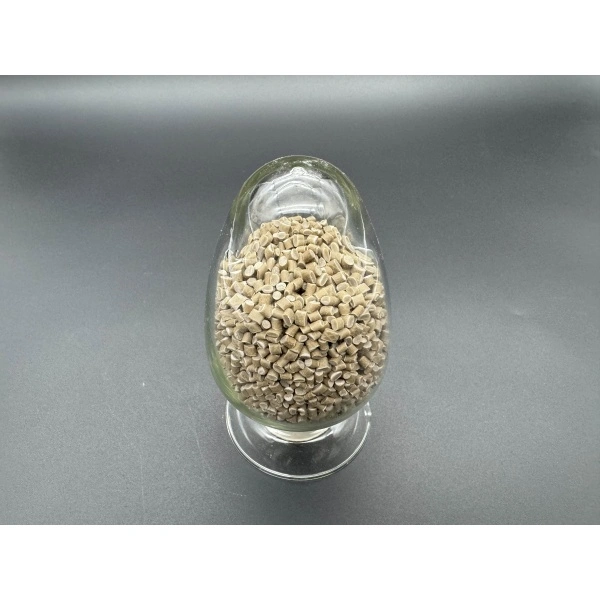
Verify third-party certifications for biodegradability claims, including EN 13432, ASTM D6400, or OK Compost.
Confirm supplier has documented traceability for agricultural waste sourcing and chain of custody.
Request sample batches for pilot production runs to validate processing behavior on your equipment.
Test final product performance against your current specifications before committing to large orders.
Assess supplier's R&D capabilities and commitment to continuous improvement in biodegradable technology.
Review supplier's production capacity and lead times to ensure reliable supply chain continuity.
Calculate total landed cost including shipping, tariffs, and potential processing adjustments.
Factor in potential premium pricing for eco-certified products and brand value enhancement opportunities.
Food packaging, consumer goods wrapping, and protective cushioning materials benefit from the balance of strength and degradability provided by husk pigment pellets.
Mulch films, greenhouse covers, and crop protection sheets can be manufactured from fully degradable materials that eliminate post-harvest removal costs.
Cutlery, plates, cups, and food containers produced from biodegradable husk pigment pellets meet growing regulatory requirements for single-use items.
Plant pots, nursery trays, and gardening accessories made from these pellets can be composted directly after use alongside their plant contents.
External casings for small electronics and accessories increasingly utilize biodegradable composites to address e-waste concerns.
Fishing gear components, buoyancy aids, and marine-related products benefit from ocean-degradable formulations that prevent persistent pollution.
An international top-notch research and development team specializing in natural plants as raw materials. Huanting Technology focuses on physical property conversion technologies for agricultural waste, creating truly recyclable and compostable materials.
Key Advantages:
When evaluating potential partners for biodegradable husk pigment pellets, prioritize suppliers with demonstrated R&D capabilities and verifiable sustainability credentials.
Essential Qualifications:
Biodegradable husk pigment pellets incorporate agricultural waste fibers, such as rice husks, into a fully degradable modified resin matrix. Unlike conventional petroleum-based plastics, these materials can be composted in industrial facilities or decompose naturally in soil and marine environments within specified timeframes. The natural pigments derived from plant sources also eliminate the need for synthetic colorants.
Degradation conditions vary depending on the specific formulation. Industrial composting typically requires temperatures between 50-60°C with controlled humidity and microbial activity, achieving complete degradation within 90-180 days. Home composting operates at lower temperatures and may take longer. Some specialized formulations are designed for ocean degradation, breaking down in marine environments over extended periods.
Yes, most biodegradable husk pigment pellets are formulated for compatibility with standard injection molding, extrusion, and blow molding equipment. However, processing parameters such as temperature profiles, screw speeds, and drying requirements may differ from conventional plastics. Working with experienced suppliers like Huanting Technology ensures you receive detailed processing guidelines tailored to your specific machinery.
Common agricultural waste materials include rice husks, wheat straw, corn stalks, sugarcane bagasse, and various crop residues. These fibrous byproducts are processed through Huanting Technology's proprietary conversion technologies to extract usable fibers that reinforce the biodegradable resin matrix. This approach transforms what would otherwise be landfill waste into valuable manufacturing feedstock.
Relevant certifications depend on your target market and application. Common standards include EN 13432 (European industrial composting), ASTM D6400 (US compostability), OK Compost certification from TUV Austria, and various national biodegradability standards. Third-party verification provides credibility for marketing claims and helps buyers meet regulatory requirements in their respective regions.
Currently, biodegradable husk pigment pellets typically carry a premium of 10-30% compared to conventional plastics, though this gap is narrowing as production scales and technology improves. When calculating total cost of ownership, consider factors such as potential regulatory compliance advantages, brand value enhancement from sustainability positioning, and reduced end-of-life disposal costs.
Minimum order quantities vary by supplier but commonly range from 1 to 5 metric tons for initial trial orders. Established manufacturers like Huanting Technology often accommodate smaller trial batches to enable customers to validate performance before committing to larger volumes. Discuss your specific requirements upfront to secure favorable terms for both sampling and production orders.
No, biodegradable husk pigment pellets should not be mixed with conventional plastic recycling streams. Contamination can compromise the quality of recycled conventional plastics and interfere with degradation processes. Separate collection and dedicated composting infrastructure are essential for proper end-of-life management of biodegradable materials.
Privacy statement: Your privacy is very important to Us. Our company promises not to disclose your personal information to any external company with out your explicit permission.
Fill in more information so that we can get in touch with you faster
Privacy statement: Your privacy is very important to Us. Our company promises not to disclose your personal information to any external company with out your explicit permission.