

Please Leave Us A Message
Privacy statement: Your privacy is very important to Us. Our company promises not to disclose your personal information to any external company with out your explicit permission.
 Huanting Technology (Ningbo) Co., Ltd
Select Language
English


Biodegradable seedling bags are specialized agricultural containers designed to nurture young plants from germination until transplanting. Unlike traditional plastic pots, these bags are crafted from natural plant-based raw materials and fully biodegradable modified resins. This innovation allows the bag to decompose naturally in soil or marine environments, eliminating the need for removal before planting and reducing labor costs significantly.
For modern growers, choosing sustainable seedling cultivation solutions means embracing a circular economy. Huanting Technology leverages advanced physical properties of natural agricultural waste to create products that protect delicate root systems while contributing to ecological balance. These bags offer a low-carbon footprint alternative to conventional polyethylene nursery bags, ensuring your farming practices remain environmentally responsible without compromising on durability or moisture retention during the critical early growth stages.
Our manufacturing process begins with premium agricultural waste fibers and fully biodegradable modified resins. We strictly control the input materials to ensure consistent mechanical strength and controlled decomposition rates. This attention to raw material quality guarantees that each batch of biodegradable seedling bags performs reliably under varying weather conditions.
Utilizing international top-notch research and development teams, we employ cutting-edge conversion technology to transform natural plant materials into high-performance products. Our facilities adhere to strict quality management systems, ensuring every roll of nursery bags meets precise thickness, tensile strength, and permeability standards required by professional horticulturists.
Quality extends beyond product performance to environmental impact. Our manufacturing process is designed to minimize water consumption and energy usage. The resulting products are certified to decompose completely, leaving no microplastic residue in the soil, which protects long-term land health and crop yields for sustainable agriculture operations.
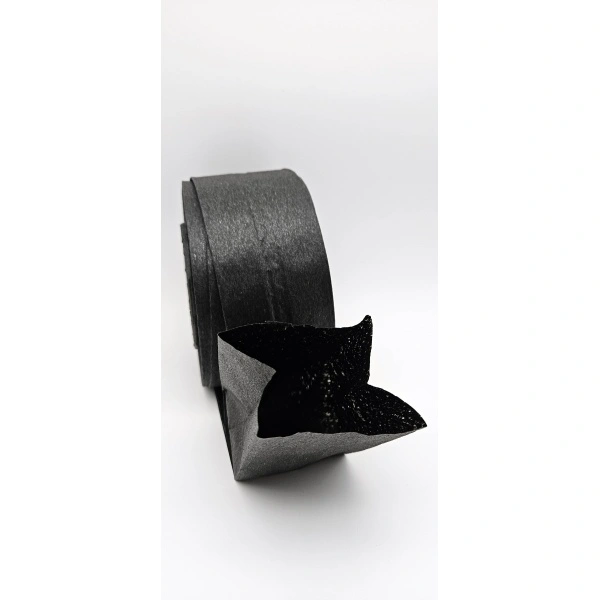
Not all biodegradable bags are created equal. When selecting eco-friendly plant starter bags, verify the specific blend of starch, PBAT, PLA, or plant fibers. Different crops have different growth cycles; fast-growing vegetables require faster-decomposing bags compared to slow-growing trees or shrubs. Ensure the decomposition timeline aligns with your typical transplant window to prevent premature structural failure or unnecessary persistence in the soil.
The best biodegradable options offer excellent air-pruning capabilities. Look for bags with micro-perforations or breathable material structures that encourage healthy root development by preventing root circling. This feature is crucial for reducing transplant shock and ensuring robust plant establishment once moved to the field or greenhouse.
While the end goal is decomposition, the bag must withstand daily watering and handling during the nursery phase. Assess the wet-strength of the material. High-quality bags resist tearing when saturated but break down efficiently when buried. Balancing immediate durability with eventual degradability is key to optimizing your nursery supply chain efficiency.
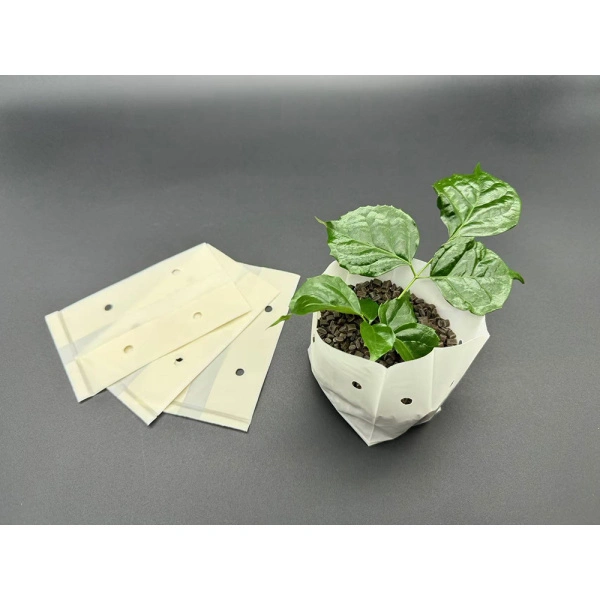
Confirm that the supplier provides valid certifications for biodegradability (e.g., TUV Austria, BPI, or local equivalents). Ensure the claims match international standards like EN 13432 or ASTM D6400 to avoid greenwashing risks.
Verify the product's shelf life. Biodegradable materials can degrade if stored in humid, hot conditions for too long. Ask about recommended storage parameters and expiration dates to ensure you receive fresh stock.
Check if the manufacturer offers custom sizing, printing, or perforation options. Tailored solutions can improve automation compatibility in your filling lines and enhance brand visibility on the farm.
Assess the supplier's production capacity and lead times. Consistent supply is vital for commercial nurseries. Inquire about their ability to scale orders during peak planting seasons without compromising quality.
The Issue: Bags breaking down before the plant is ready for transplant.
Solution: Work with suppliers who test decomposition rates under various soil conditions. Specify your crop's growth cycle length to ensure the bag lasts long enough.
The Issue: Biodegradable materials sometimes absorb water differently than plastic, leading to drying out faster.
Solution: Implement automated irrigation systems calibrated for porous bags. Select bags with added moisture-retention polymers if manual watering is frequent.
The Issue: Improper warehouse storage causing mold or early breakdown.
Solution: Store bags in cool, dry, and well-ventilated areas. Avoid direct sunlight and high humidity. Request data sheets on optimal storage temperature and humidity ranges from your vendor.
Large-scale flower and vegetable producers use biodegradable bags to streamline transplanting. The ability to plant directly reduces labor time and minimizes root disturbance, leading to higher survival rates for sensitive ornamental and edible crops.
In large-scale tree planting initiatives, removing plastic pots is impractical. Biodegradable seedling bags allow saplings to be planted directly into the ground, where the bag decomposes and enriches the soil with organic matter over time.
For residential gardeners and urban farms, these bags eliminate the hassle of cleaning and disposing of plastic pots. They support the growing consumer demand for zero-waste gardening practices and compostable home solutions.
Organic farms often face restrictions on synthetic plastics. Using certified biodegradable nursery bags helps maintain organic integrity throughout the supply chain, from propagation to field planting, ensuring compliance with strict agricultural standards.
Huanting Technology stands out as an international top-notch research and development team. We don't just manufacture; we innovate. Our focus on converting agricultural waste into valuable resources gives us a unique edge in producing high-performance, cost-effective biodegradable materials.
Our purpose is deeply rooted in environmental contribution. By choosing us, you align with a partner who advocates green living and social responsibility. We help our clients reduce their carbon footprint while maintaining the highest standards of product quality and reliability.
We provide more than just bags. As experts in fully biodegradable modified resin and plant fiber products, we offer tailored solutions for various applications. Our team supports you from material selection to final product design, ensuring your specific agricultural needs are met with precision.
We insist on using advanced production processes to manufacture materials that meet customer expectations. Our commitment to quality first ensures that every order you receive is consistent, durable, and truly biodegradable, protecting your reputation in the market.
Yes, high-quality biodegradable seedling bags are designed to decompose naturally in soil. Under the right conditions of moisture, temperature, and microbial activity, the materials will break down within a few months after being planted. This process leaves behind organic matter that can actually improve soil structure, unlike conventional plastics which persist for decades.
To maintain the integrity of biodegradable bags, store them in a cool, dry, and shaded environment. Avoid areas with high humidity or temperatures above 30°C (86°F), as excessive heat and moisture can accelerate degradation before use. Keep the bags away from direct sunlight and potential sources of contamination. Proper storage can extend their shelf life significantly.
Modern biodegradable bags are engineered to withstand significant moisture. While they may feel slightly softer than plastic when wet, they retain sufficient tensile strength to handle regular irrigation and handling during the nursery phase. However, prolonged submersion or standing water should be avoided, as this can speed up the decomposition process prematurely.
Absolutely. Many manufacturers, including Huanting Technology, offer customization services. You can specify dimensions to fit your automated filling equipment and request custom logos or informational prints. Customization helps with brand recognition and ensures the bags fit your specific crop requirements perfectly.
All compostable materials are biodegradable, but not all biodegradable materials are compostable. "Compostable" usually implies certification to break down within a specific timeframe in industrial composting facilities, leaving no toxic residue. "Biodegradable" is a broader term meaning the material can be broken down by bacteria. For agricultural use, certified compostable bags are often preferred to ensure soil safety.
Privacy statement: Your privacy is very important to Us. Our company promises not to disclose your personal information to any external company with out your explicit permission.
Fill in more information so that we can get in touch with you faster
Privacy statement: Your privacy is very important to Us. Our company promises not to disclose your personal information to any external company with out your explicit permission.