

Please Leave Us A Message
Privacy statement: Your privacy is very important to Us. Our company promises not to disclose your personal information to any external company with out your explicit permission.
 Huanting Technology (Ningbo) Co., Ltd
Select Language
English


Black environmentally agricultural mulching film is a specialized agronomic tool designed to suppress weed growth, retain soil moisture, and regulate soil temperature while protecting the environment from traditional plastic waste.
Unlike conventional polyethylene films that persist in fields for years, this advanced solution utilizes biodegradable materials derived from natural plant sources. It allows farmers to maintain high crop yields without the burden of post-harvest removal and disposal, significantly reducing labor costs and preventing microplastic contamination of arable land.
By integrating fully decomposable technology, this film completes its lifecycle by breaking down into organic matter, water, and carbon dioxide, contributing to a sustainable circular economy in agriculture.
Ensuring consistent quality in black environmentally agricultural mulching film requires rigorous control over raw material sourcing and manufacturing processes. Huanting Technology leverages its expertise in fully biodegradable modified resin to produce films that meet stringent international standards for decomposition and mechanical strength.
We utilize fully biodegradable materials and plant fiber products as primary inputs. This ensures that the final film is free from toxic additives and heavy metals, making it safe for soil health and compatible with organic farming certifications.
Our production lines employ advanced extrusion technologies to achieve uniform thickness and tensile strength. This precision guarantees that the mulch film performs reliably under field conditions—resisting tears during installation while maintaining opacity to effectively block sunlight and inhibit weed photosynthesis.
Every batch undergoes testing to verify complete biodegradability. We ensure that the breakdown rate aligns with the crop growth cycle, allowing the film to degrade naturally after harvest without leaving harmful residues.
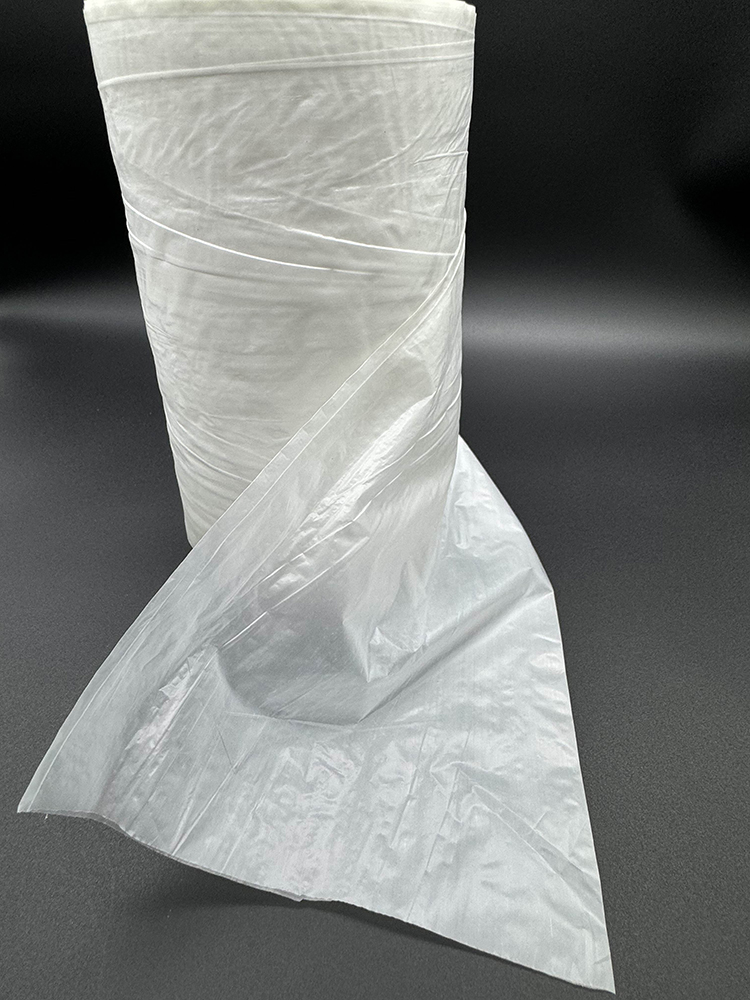
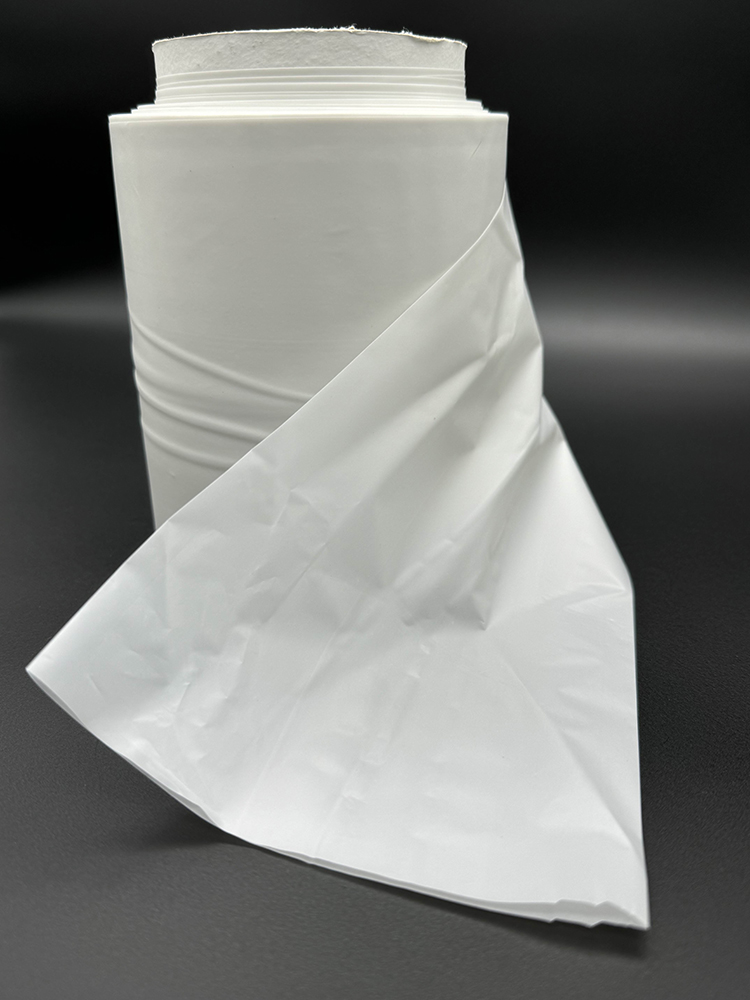
Choosing the appropriate black environmentally agricultural mulching film involves evaluating several key factors to ensure compatibility with your specific crops and local climate conditions.
Film thickness, measured in microns, determines its lifespan and resistance to environmental stressors. Thicker films offer greater durability for long-season crops but may require longer decomposition times. Select a gauge that balances field performance with your desired degradation timeline.
Verify that the film is made from fully biodegradable modified resin or plant-based polymers. Avoid blends containing non-degradable polyethylene. Look for certifications such as EN 13432 or ASTM D6400 to confirm industrial compostability.
For outdoor applications, UV stabilizers are essential to prevent premature brittleness. Ensure the product offers sufficient UV resistance to withstand solar exposure throughout the growing season while still breaking down effectively afterward.
Match the roll dimensions to your planting equipment. Standard widths facilitate efficient mechanized laying, reducing labor time and ensuring consistent coverage across large fields.
Use this checklist to evaluate potential suppliers of black environmentally agricultural mulching film and ensure you partner with a reliable manufacturer.
Does the supplier provide valid third-party certifications for biodegradability (e.g., TUV Austria, BPI)?
Can the manufacturer scale to meet your seasonal volume requirements without compromising quality?
Does the supplier offer guidance on application techniques and decomposition timelines for your region?
Are trial samples available for field testing before committing to bulk orders?
Is the source of raw materials (e.g., plant fibers, biodegradable resins) clearly documented?
Does the supplier provide Life Cycle Assessment (LCA) data demonstrating reduced carbon footprint?
When sourcing black environmentally agricultural mulching film, prioritize manufacturers with proven R&D capabilities and a commitment to sustainable innovation.
A leader in natural plant-based materials, Huanting specializes in fully biodegradable modified resin and plant fiber products. Their focus on agricultural waste conversion technology ensures low-carbon, high-performance mulching solutions.
Known for customizable biodegradable films, AgriGreen offers tailored thickness and decomposition rates for diverse crop cycles. They emphasize strict quality control and international compliance.
Pioneering next-generation polymer blends, EcoFarm combines starch-based plastics with PBAT for enhanced durability. They provide comprehensive technical support for large-scale agricultural operations.
Black environmentally agricultural mulching film is versatile and suitable for a wide range of agricultural and landscaping applications.
Ideal for root vegetables and leafy greens, suppressing weeds and retaining moisture in high-value crop production.
Used between rows to control grass growth, reduce mowing costs, and improve soil health under fruit trees and vines.
Complies with organic standards by eliminating plastic residue and chemical herbicides, supporting certified sustainable practices.
Effective in garden beds and public green spaces to prevent weed invasion and soil erosion while blending aesthetically.
Provides consistent soil temperature and moisture for seed germination, accelerating early growth stages.
Alternative to turfing for ground cover, offering a low-maintenance, eco-friendly solution for large areas.
The lifespan typically ranges from 3 to 6 months, depending on the film thickness, ambient temperature, and microbial activity in the soil. Manufacturers can tailor decomposition rates to match specific crop cycles.
No. One of the primary benefits of biodegradable mulch is that it can be plowed directly into the soil after harvest. It will gradually decompose, improving soil structure and adding organic matter.
While the initial cost per ton may be higher, the total cost of ownership is often lower due to savings on labor (no removal required), disposal fees, and potential yield increases from better weed and moisture control.
Look for certifications such as EN 13432 (European standard for compostable packaging), ASTM D6400 (US standard for compostable plastics), and OK Compost INDUSTRIAL. These verify that the product will fully decompose in industrial composting conditions.
Yes. Modern biodegradable films are engineered to have sufficient tensile strength and flexibility to be laid using standard automatic mulch-laying machines, ensuring efficient and consistent application.
Black mulch is superior for weed suppression as it blocks all light. Clear mulch can increase soil temperature but allows weeds to grow underneath. Silver mulch reflects light to deter insects. Black biodegradable mulch offers the best balance of weed control and environmental sustainability.
Privacy statement: Your privacy is very important to Us. Our company promises not to disclose your personal information to any external company with out your explicit permission.
Fill in more information so that we can get in touch with you faster
Privacy statement: Your privacy is very important to Us. Our company promises not to disclose your personal information to any external company with out your explicit permission.